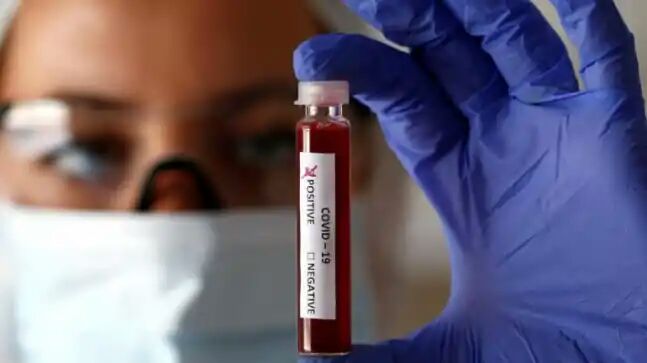
Study shows Covid-19 is mutating to become more infectious
Researchers in Florida have found the new coronavirus might be tricking human cells to infect them more easily than it did during the initial outbreak in China.
This mutation, which may explain Covid-19’s rapid spread in Europe, the United States and Latin America, isn’t leading to more lethality though, at least as of now, according to the findings of the Scripps Research Institute.
How Viruses Mutate
Remember, viruses mutate in order to reproduce, more so when hosts turn hostile.
They do so by changing their surface proteins in order to gain access into inhospitable cells.
- Roche, Cipla Launch Antibody Cocktail Casirivimab and Imdevimab in India. Check Price, Details
- Woman ‘bought by husband’ for Rs 40,000 tries to sell 5-year-old daughter for Rs 500
- Delhi reported 25 dengue cases till May 22, highest in Jan-May period since 2013
- WILL INDIA BLOCK FACEBOOK, TWITTER, INSTAGRAM IN 2 DAYS AS NEW IT RULES COME INTO EFFECT?
- DELHI POLICE VISITS TWITTER INDIA OFFICES IN DELHI, GURUGRAM AMID ‘CONGRESS TOOLKIT CONTROVERSY’
The Scripps team suggests the novel coronavirus could just be doing the same.
The pathogen ravaging the planet gets its name from the spikes that protrude from the viral envelope. The new coronavirus uses these formations to stick to the human cells and infect them.
In their pre-print study, which is not yet peer-reviewed, the researchers noted that the mutation in the new coronavirus is giving it more spikes, which help it get into the host cells more easily.
That said, the new mutation, called D614G, doesn’t seem to cause more severity among the patients nor is it likely to have an impact on the vaccines under development.
New Strain More Infectious
The mutation, the study noted, “appears to be more transmissible without resulting in a major observable difference in disease severity”.
Scientists involved in the discovery of D614G analysed samples collected from Europe and the US.
“…a few mutations can result in the virus changing and what we’re always watching out for is any change that changes the clinical impact of the disease,” World Health Organisation Executive Director Michael J Ryan earlier said.
At this moment, the major consequence of this mutation is limited to the transmission rate of the virus and not the severity, the scientists noted.
In an interview to The Washington Post, the lead researcher, Dr Hyeryun Choe, reported that the mutation “made the virus 10 times more infectious in the lab experiment”.
The study, published on the pre-print server BioRxiv, argues that higher levels of functional spike proteins possibly increase “the chance of host-to-host transmission, but other factors limit the rate and efficiency of intra-host replication”.
The scientists don’t see it impacting the antibody behaviour.
According to the WHO, there are more than 49,000 full genome sequences that are available. “As this is an RNA virus, there are expected changes in them and we’re trying to determine if those changes have any impact on the way that this virus behaves. We haven’t seen that yet but we have a group of people globally who are looking at this,” the WHO technical lead on Covid-19, Dr Maria Van Kerkhove, told reporters in Geneva last week.
Study shows Covid-19 is mutating to become more infectious
stay connected with us! For more updates
LIKE SHARE and SUBSCRIBE
if you like the article information then press the like button, Comments you’re opinions about this article and share it with family and friends on social media platforms
SUSCRIBE Quickclarity news to get latest news updates
Disclaimer : This story is auto-aggregated by a computer program and has not been created or edited by Quickclarity news.
Publisher – India Today
Thank you for reading

 QUICKCLARITY