Indian exports to the US of goods that were previously allowed as duty-free under a special trade scheme called the Generalized System of Preferences (GSP) increased in the six months after the Trump administration withdrew these benefits last June, according to people familiar with the negotiations and parliamentary communications by the Modi government’s commerce ministry.
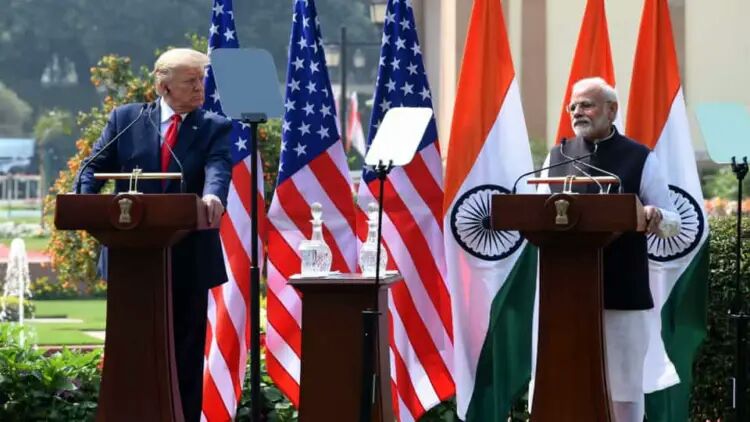
The restoration of these GSP benefits in exchange for concessions — essentially more access for US firms to certain Indian markets — were to have been key components of a limited trade deal that was intended to be announced during President Donald Trump’s just-concluded India visit.
It wasn’t, to all-around disappointment. India and the United States declared Tuesday, after talks between President Trump and Prime Minister Modi that they will ‘promptly conclude’ Phase One of a comprehensive bilateral trade agreement at a future, but at an undetermined date; possibly after the November elections in the US.
The unexpected growth in exports of these goods, which may or may not last in the longer term, emboldened Indian officials, making them less compelled to concede ground in negotiations with American officials, who constantly ‘changed the goalpost’, said the people cited above.
A review of India’s eligibility for the GSP scheme was ordered in 2018, and India was removed from the programme, which currently has 120 beneficiary countries, in June 2019.
The termination of GSP benefits, however, was nowhere as crippling as Indians feared.
‘So far the cumulative exports under GSP tariff lines have not declined in the post GSP withdrawal period (June – Oct 2019) as compared to the corresponding period of the previous year,’ Union commerce minister Piyush Goyal told Lok Sabha in response to a written questions on December 11, 2019.
But the fallout of the US decision is unexpected. The growth in the export of GSP goods, ranging between 3,500 to 3,800 different items, is understood to have gone up by 5.5% over the corresponding period, which is way more the 1.9% growth in overall Indian exports to the United States, according to people closely associated with India-US trade discussions.
It was not a uniform increase across the spectrum, the people said. Kitchen gadgets and equipment, for instance, declined. But some others shot up noticeably. India exported processed foods, leather and gems and jewellery worth $783 million to the United States in 2018. The export of these goods jumped by almost 3.8% in 2019 between June and September, according to data cited by the commerce minister in a Lok Sabha reply.
GSP has been a key part of India-US trade. It accounted for $6.3 billion worth of Indian exports to the United States in 2018, which is a 12.1% of total Indian goods exports to the United States. The total duty saved because of the scheme was $240 million. Indians were worried, more significantly, of losing American importers of their goods, which would be costlier now because of the newly imposed tariffs.
But their importers largely stood by them. That the tariffs that went into effect after the termination of GSP were not substantial, ranging between 0.25% and 8%, also helped, according to the people familiar with these negotiations.
They conceded that the importers could be staying with their suppliers for now in the hopes of India being restored the terminated benefits, which is a distinct possibility, as is it the key Indian demand for any future trade deal. In the unlikely scenario of that not happening, however, they might switch to other suppliers to keep their costs down.
Biswajit Dhar, a professor of economics at JNU and former trade negotiator for India said that there could be two factors contributing to the continued uptick and even growth of the erstwhile GSP goods. One, transactions between exporters and importers are sometimes bound by medium-term contracts and they will continue to do business till they run out or a reviewed. Two, there is a question of ‘substitutability’ if the importer can source these goods from somewhere else.
But the Modi government did address the underlying reason for the levy, and has been chipping away at the deficit with bigger and bigger purchases of American natural gas and oil, defence equipment and passenger planes.
The deficit is down from $30 billion in 2017 to $24 billion. The president noted it at a news conference in New Delhi earlier in the week, but kept up the pressure. ‘It’s now down to $24 billion because of what we’ve been doing,’ he said. ‘But still, that’s too high. We shouldn’t have a 24-billion-dollar deficit.’
stay connected with us! For more updates
LIKE SHARE and SUBSCRIBE
if you like the article information then press the like button, Comments you’re opinions about this article and share it with family and friends on social media platforms
SUSCRIBE Quickclarity news to get latest news update
Thank you for reading.

 QUICKCLARITY